The Science Conference
Neurodiversity Pride Week 2026 · Science Conference
Meet the speakers of the Neurodiversity Pride Science Online Conference
Le Neurodiversity Pride Science Online Conference brings together researchers, lived-experience experts, educators, advocates, artists, designers, and systems thinkers from around the world. Across one full day, the programme explores neurodiversity not as a problem to be solved, but as a source of knowledge, identity, culture, creativity, and social change.
The presentations move across many fields and questions: discrimination and legal protection, autistic social entrepreneurship, inclusive education across cultures, hallucinations and sensory experience, neurodivergent artistry, game design, workplace communication, employment narratives, unmasking, disclosure, leadership, cognitive fingerprints, relationship ecosystems, and the future of neuroinclusive workplaces. Some talks focus on policy and systems. Others begin with the body, creativity, culture, or lived experience. Together, they show how wide and urgent the field of neurodiversity research has become.
This is also an online conference designed for connection. We use Hyhyve, an interactive online world where you can watch the presentations, but also walk around, meet other participants, and have your own conversations between sessions. Instead of simply watching a stream, you can move through the digital space, join others, and experience the day more like a real conference environment.
The speaker programme below is listed in chronological order, from the opening session to the final presentation and closing. There will be a lunch break from 13:00 to 14:00 and a dinner break from 18:30 to 19:30. During these moments there are no presentations scheduled, so participants can rest, eat, explore the Hyhyve space, or connect with others.
Programme note: all times are listed in CEST / Amsterdam time. You can use the overview below to follow the conference from the first presentation of the day to the closing session. Register your free ticket, to get full access to the Science Conference and its interactive world. Tickets are free. .
10:00 CEST · Amsterdam time
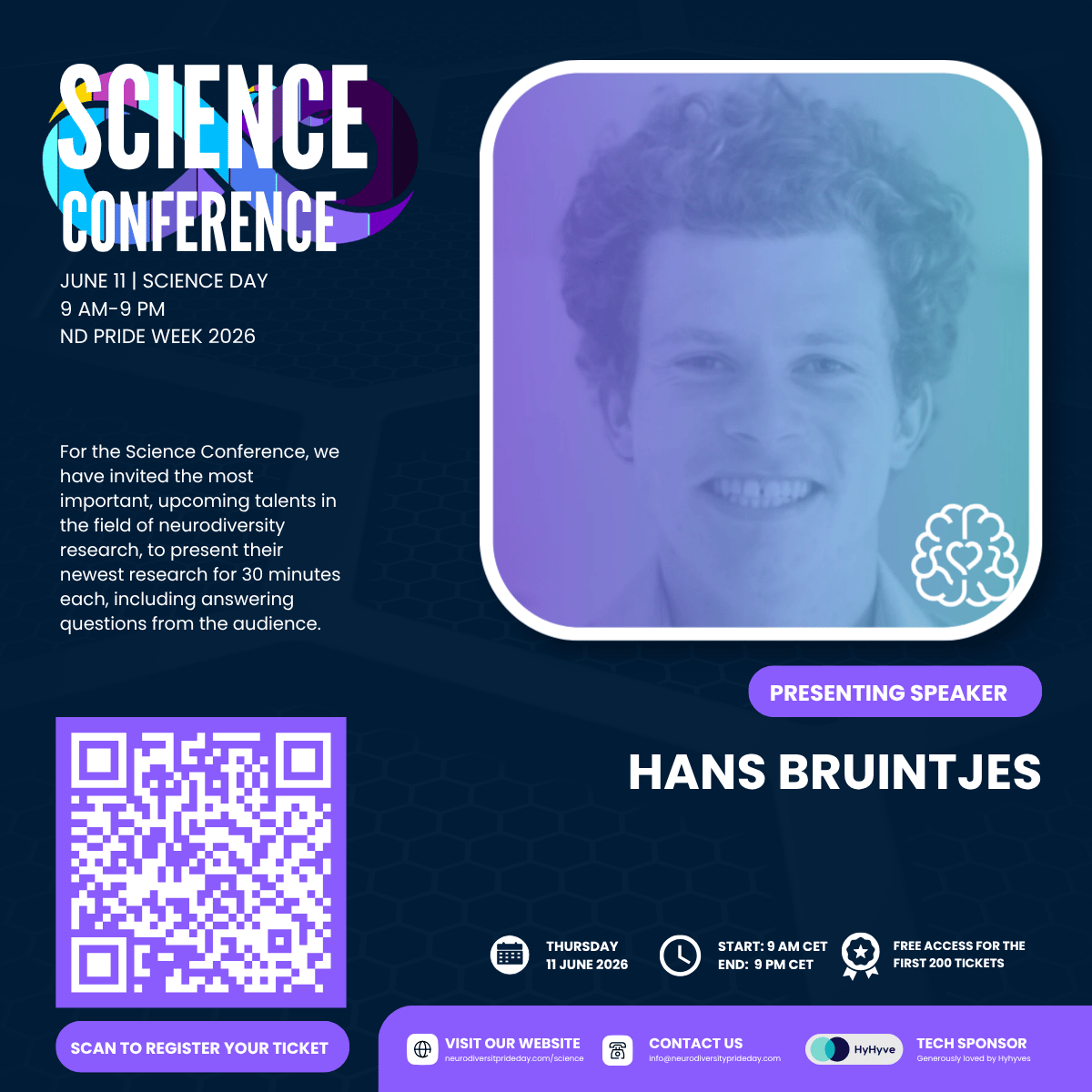
Hans Bruintjes
Based in Zwolle, the Netherlands
Hans Bruintjes conducts research on discrimination against neurodivergent people in education, the labour market, government action, and legal protection.
His work brings together personal stories, Dutch law, international treaties, public policy, and sociological factors. For years, Hans worked as a policy advisor in Dutch politics, where inclusion and discrimination were part of his portfolio. In that role, he read policy documents on inclusion and reports on discrimination, and used them to write speeches and motions for political debates.
While reading these documents, Hans was repeatedly struck by how rarely the discrimination and inaccessibility experienced by neurodivergent people were mentioned. This absence matters: when a group’s experiences are not named in policy, public debate, or legal protection, the pressure to take meaningful action remains low.
Read more about this speaker
Hans wants that pressure to increase. He also believes it is important that policymakers know how to act in ways that actually lead to positive results. His research therefore does not only identify discrimination and inaccessibility, but also asks what practical steps can be taken by policymakers, institutions, and professional groups.
His work connects to wider legal and political developments. A petition on this subject was presented to the Dutch Parliament on 30 September 2025. The European Parliament also adopted a resolution on 4 October 2023 to better protect the rights and wellbeing of autistic people.
Hans is also preparing a book on this subject, including practical information that can be applied across different professional fields. His contribution to the Science Conference brings together policy experience, legal awareness, and a clear call for better protection against discrimination faced by neurodivergent people.
10:30 CEST · Amsterdam time
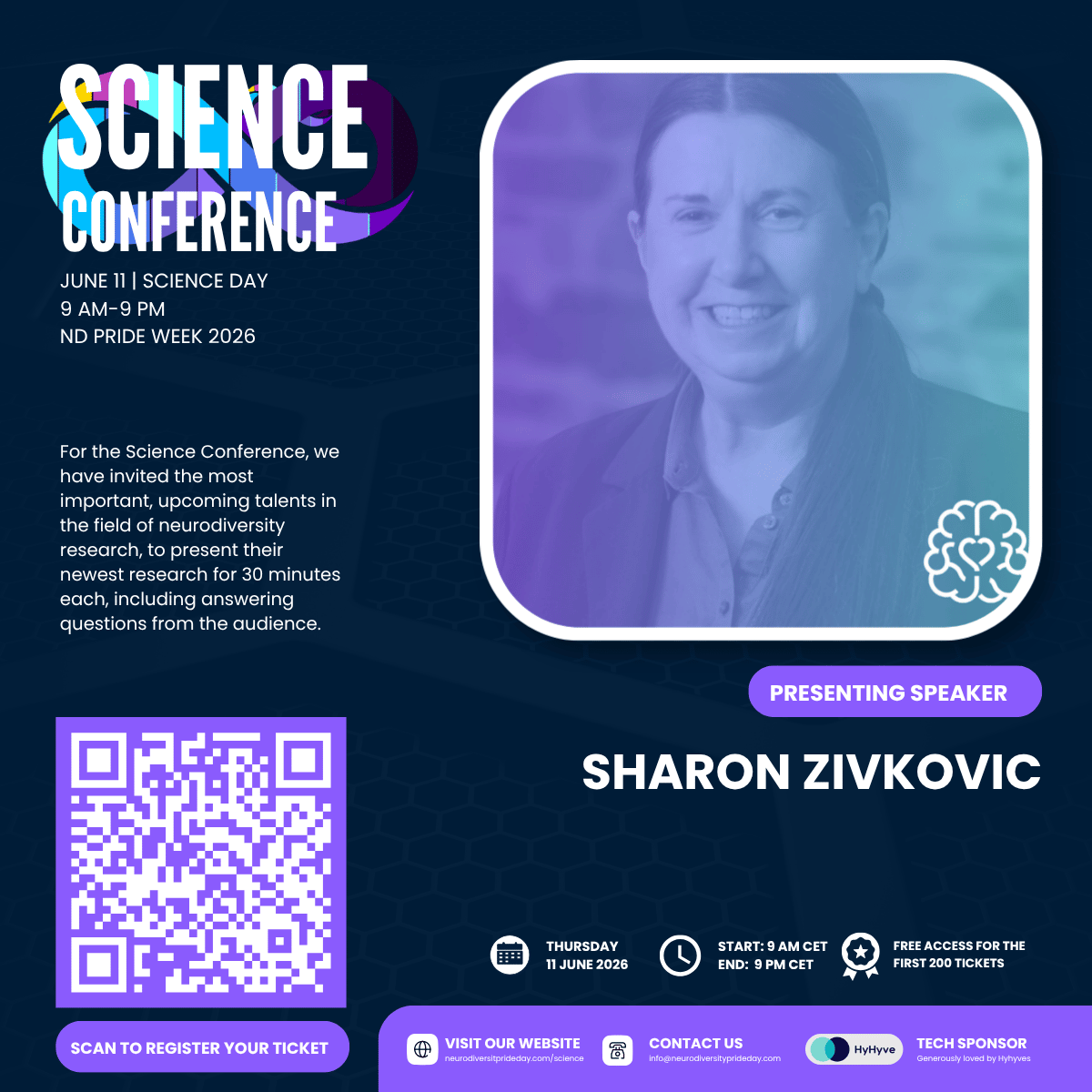
Sharon Zivkovic
Adelaide, Australia
If Australia is to realise the commitment in its National Autism Strategy of supporting autistic individuals to start social enterprises, it will need to develop the knowledge and skills of disability and business support services to assist autistic social entrepreneurs.
Sharon Zivkovic is an Australian AuDHD social entrepreneur, systems thinker, and independent researcher. In addition to a PhD, she holds master’s degrees in both Entrepreneurship and Autism.
For this fellowship, Sharon is investigating the influence of a new Program for Supporting Autistic Social Entrepreneurs, developed by her social enterprise, Community Capacity Builders. The program is being piloted as a place-based initiative in collaboration with the Centre for Participation and members of the Wimmera All Abilities Network.
Read more about this speaker
The Program for Supporting Autistic Social Entrepreneurs has been purposefully designed to provide disability service providers, social enterprise support services, and business support services with the knowledge and skills to assist autistic social entrepreneurs in a strengths-based and neurodiversity-affirming manner.
The program consists of three units:
- What is Autism?
- Autistic Innovation and Entrepreneurship
- Autistic Entrepreneurial Ecosystems
Sharon’s fellowship investigation focuses on four central questions:
- How does participation in the program impact the practice of participants in supporting autistic social entrepreneurs?
- How does participation in the program impact the practice of the organisations and communities that participants interact with?
- What enabling factors and blocking factors affect participants’ ability to implement and disseminate the principles contained within the program?
- What interventions need to be developed to amplify the enabling factors and dampen the blocking factors that have been identified?
11:00 CEST · Amsterdam time
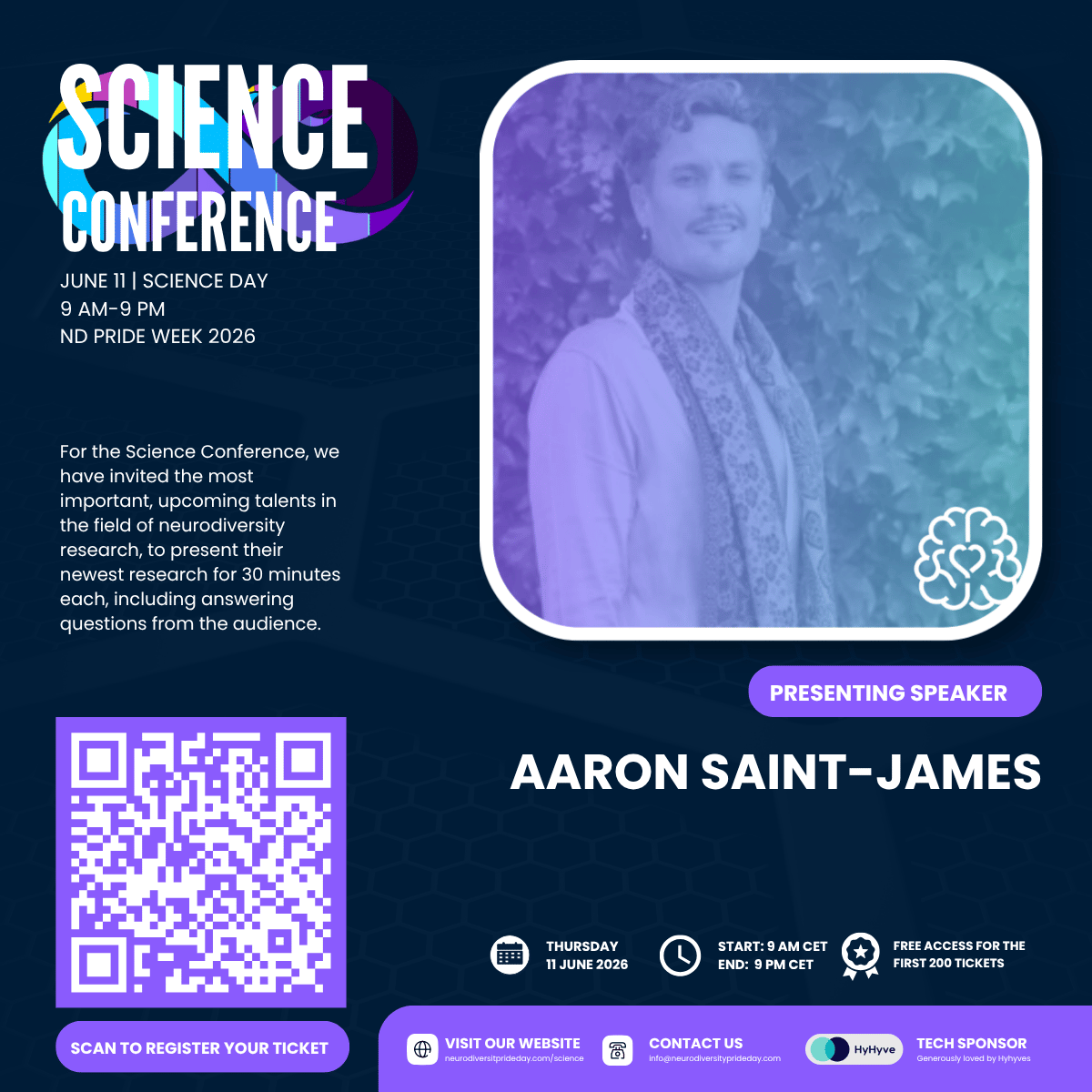
Aaron Saint-James
Based in New South Wales, Australia
Universal Design for Learning has been part of Australian higher education policy conversations for years. Aaron Saint-James asks why so many universities still struggle to put it into practice.
Aaron Saint-James is a neurodivergent researcher, educator, and advocate whose work is rooted in disability justice, accessibility policy, and higher education design. He is currently a Master of Research candidate in Education at UNSW Sydney, where he investigates the adoption of Universal Design for Learning, including UDL 3.0, across Australian higher education institutions.
Aaron’s work is shaped by lived experience as well as academic research. His ADHD, autism, and dyslexia are not separate from his research focus; they are part of why he does this work. His research asks what happens when accessibility exists in policy language, but does not yet become part of everyday university practice.
Read more about this speaker
Alongside his research, Aaron works as a lived-experience researcher and Neuro-Inclusive Senior Project Officer at UNSW. He also co-founded the Diversified Project, a nationally recognised neuroinclusive education initiative that began as a small co-production group of students and staff and developed into a peer-reviewed, award-winning programme operating across the sector.
Through a national audit of 42 Australian universities, Aaron has been mapping where Universal Design for Learning genuinely exists in practice, and where it remains mostly present on paper. His fellowship research focuses on the gap between institutional commitments and the actual experience of students navigating higher education systems.
His investigation asks four central questions:
- What does authentic UDL 3.0 implementation look like across Australian universities?
- How can universities distinguish genuine accessibility work from performative compliance?
- Which structural, cultural, and policy-level factors enable or block neuroinclusive practice?
- What patterns of adoption across the sector could inform a scalable, evidence-based framework?
Aaron describes his path into research as beginning with advocacy and survival. As a first-generation, mature-age student, he researches for students whose experiences mirror his own: neurodivergent students navigating systems that were not originally designed with them in mind.
11:30 CEST · Amsterdam time
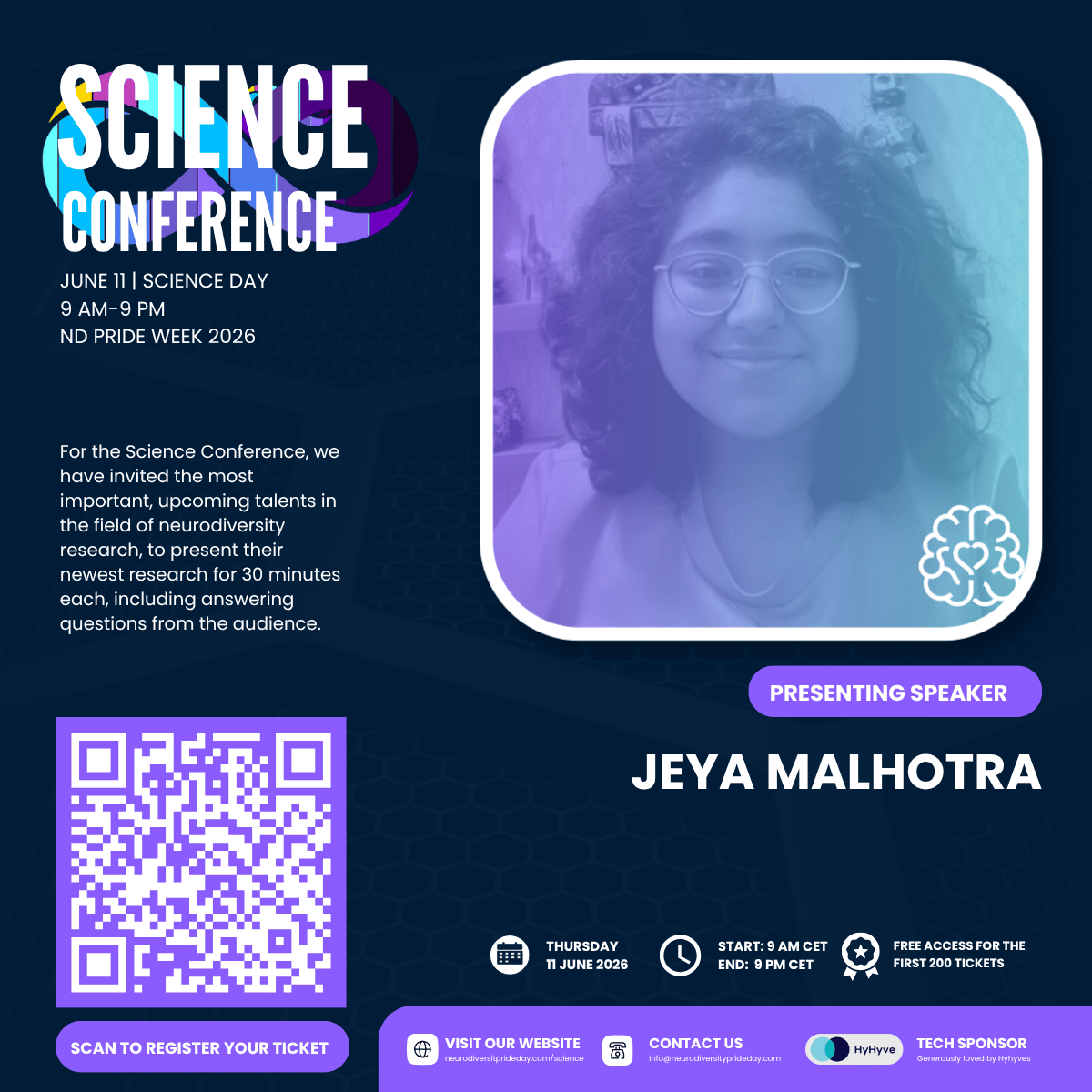
Jeya Malhotra
From Bangalore, India
We often evaluate nations through the lens of governance, policies, and socio-economic indicators, yet rarely consider inclusivity as a measure of progress.
Jeya Malhotra is a 17-year-old changemaker from Bangalore, India, and the founder of Khwaish, an initiative for children with neurodiversity. Through Khwaish, she raises awareness and designs vocational skills curricula tailored to children’s unique learning patterns.
Her current research explores neurodiversity through a cross-cultural comparative analysis of pedagogical approaches for neurodivergent children and their cognitive outcomes. While countries implement diverse strategies for neurodiversity, her research asks which frameworks and methods demonstrate tangible impact on learning processes.
This study aims to provide educators, policymakers, and parents with a structured, evidence-based metric and correlation model to identify the most effective strategies for cultivating inclusive learning environments.
12:00 CEST · Amsterdam time
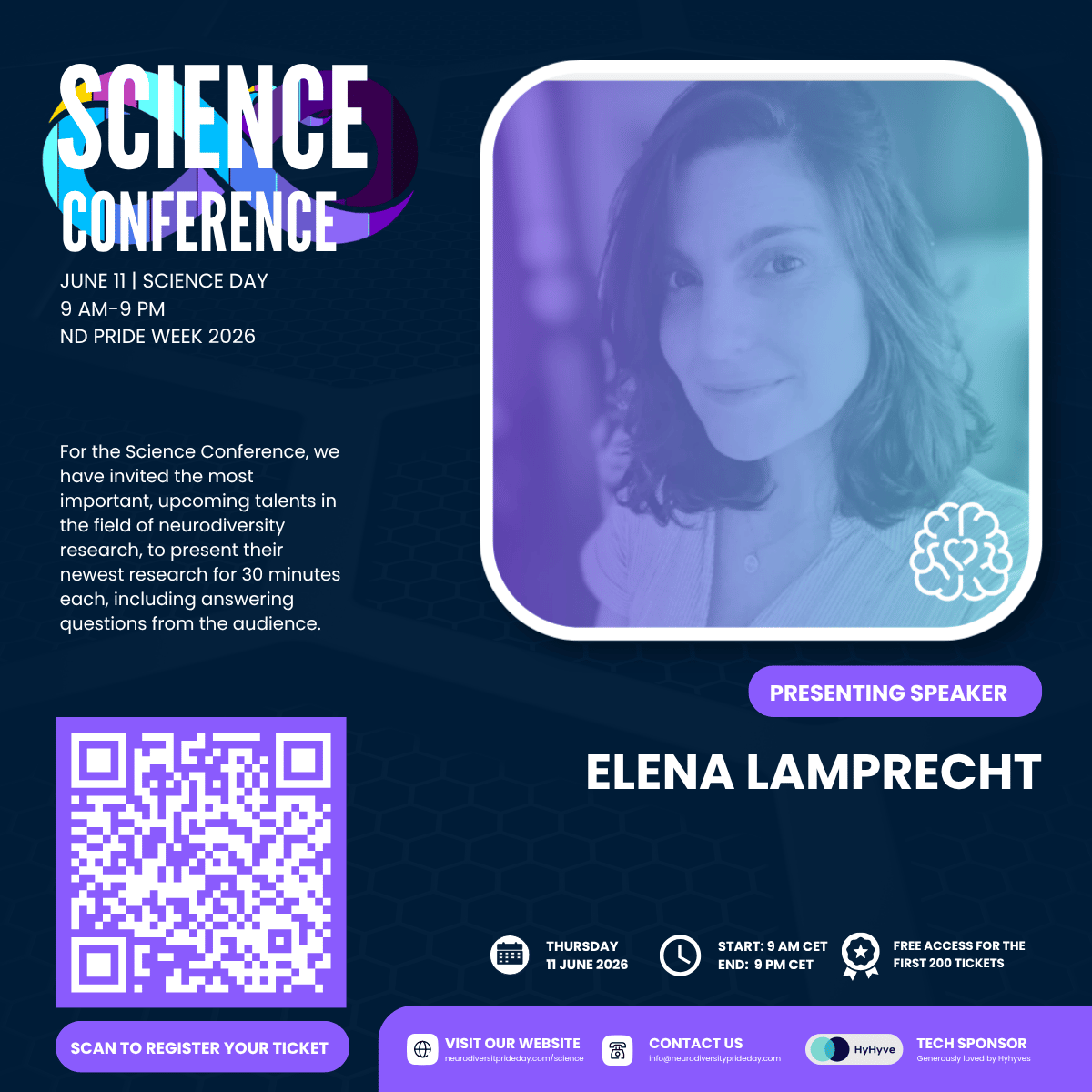
Elena Lamprecht
Based in Sydney, Australia
What drives hallucinations in neurodiverse populations? A sensory and genetic approach.
Elena Lamprecht is a Cuban-American independent researcher in psychosis and neurodiversity, based in Sydney, Australia. Her research asks why autistic people are at significantly higher risk of experiencing hallucinations. While 3-12% of the general population may have such experiences, the figure for the autistic community is closer to 35%.
For Elena, this disparity suggests that our clinical understanding is missing something fundamental. Her work explores the relationship between autism, sensory processing, trauma, genetics, culture, and hallucination risk, with the aim of developing better frameworks for understanding and support.
Read more about this speaker
Elena’s path has been shaped by more than a decade of working with neurodivergent children and their families. She first worked as a preschool teacher in Shanghai, and later as a special educator and early intervention specialist in New York and Sydney. Across these cultural contexts, she observed recurring intergenerational patterns of psychosis, particularly around hallucinations and differentiated sensory systems.
These observations also resonated with her own experiences, including postpartum psychosis. Later, she was able to connect what she had witnessed, along with other episodes, to lived-experience perspectives. Diagnoses of autism, ADHD, and C-PTSD further opened her awareness that genetic and environmental factors may be significant, unspoken risk factors.
In a recent manuscript exploring her own sleep paralysis, Elena examines how cultural narratives shape hallucinatory experiences. Her Hispanic heritage gave her the language, “se me subió el muerto”, to make sense of that terror in a way that neurobiology alone could not. For Elena, stigma thrives in a vacuum and is dismantled when people can name their experiences and see them reflected in their communities.
Her current project tests whether elevated hallucination risk in autism is driven by three interconnected pathways: sensory processing differences, trauma, and shared genetic factors. If sensory sensitivity is confirmed as a key pathway, this could improve early detection and lead to more affirming, culturally informed interventions. Elena’s goal is to translate this work into real-world resources that help prevent crises and challenge stigma, particularly for women, neurodivergent individuals, and non-Westernized populations whose stories are too often left out of research.
12:30 CEST · Amsterdam time
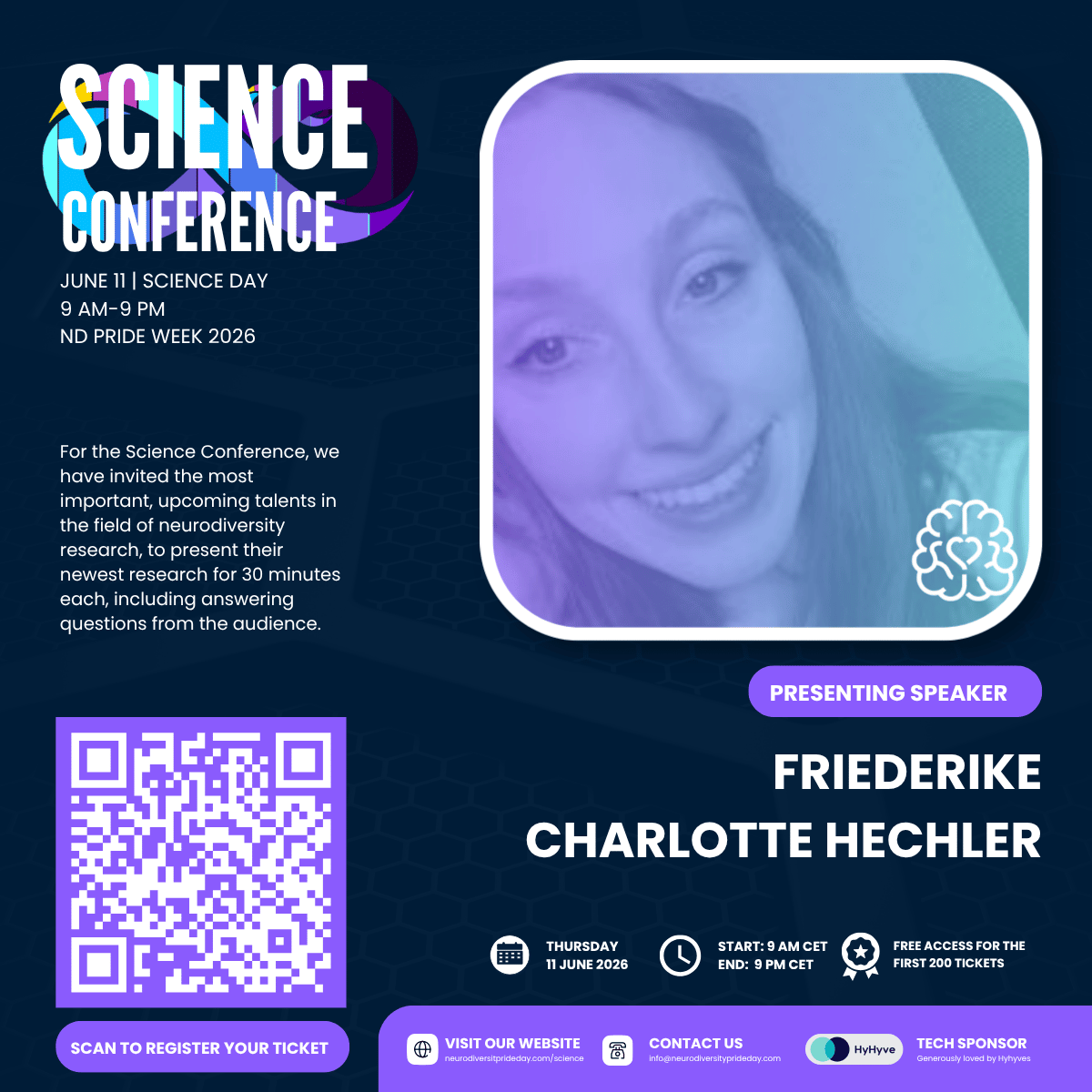
Friederike Charlotte Hechler
Based in Italy
What if social “difficulties” don’t live within individuals, but emerge between people?
Friederike Charlotte Hechler is a cognitive scientist whose work pivots around the question: How do people understand one another, and what happens when that process breaks down?
Rather than conceptualising social difficulty as a fixed characteristic of an individual, Friederike frames it as an emergent property of interaction. Her research investigates the dynamic alignment between partners, and how mismatches can shape social experience.
Read more about this speaker
In her research, Friederike investigates interpersonal coordination, for instance in eye gaze or speech, across neurodiversity, as well as in human-human and human-machine interaction. A defining feature of this work is its participatory approach. She sees inclusion not only as a social responsibility, but as a methodological necessity for advancing science.
In partnership with autistic people, Friederike has helped revise and validate a measure of autistic traits, the CATI-R, with the aim of creating a tool that is accessible, non-stigmatising, and sensitive to a wide range of individual experiences.
Her interest in interpersonal coordination is not only academic, but also deeply personal. Alongside her scientific training, she has worked for many years as a dance instructor. In dance, coordination is lived, embodied, and relational. Subtle shifts in timing, rhythm, breath, and gaze can create a sense of connection that is immediately felt, even if it is difficult to put into words.
Dance also sensitised Friederike to diversity. Different bodies coordinate differently. Rather than asking whether someone can coordinate “normally”, she is interested in how coordination emerges between specific partners, and under which conditions it flourishes.
As a Research Fellow with the Neurodiversity Foundation, Friederike is conducting research on nutrition and eating behaviour in autistic adults, particularly autistic women and gender-diverse people. This project seeks to identify mechanisms that shape everyday experiences around food, sensory preferences, routines, and wellbeing. A central goal is to translate the findings into a practical, community-informed digital resource that supports autonomy and wellbeing while remaining grounded in lived experience.
14:00 CEST · Amsterdam time
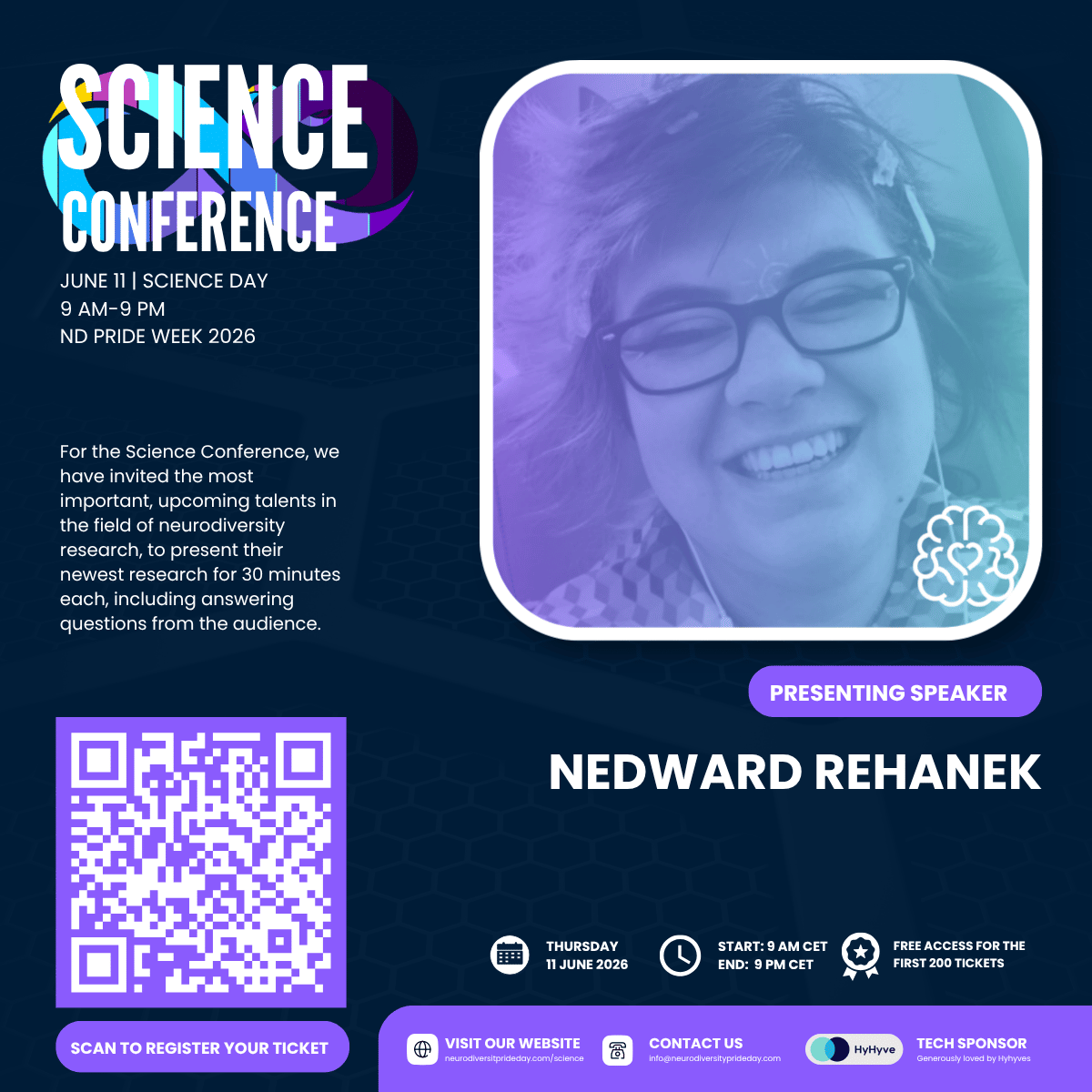
Nedward WD Rehanek
Based in Ontario, Canada
Games are an excellent way to tell stories and express oneself. Playing with player agency and world immersion can deepen the storytelling power of games. Games are art.
Nedward WD Rehanek wears many hats: designing games, making art, and researching neurodiversity, madness, disability, and how these fields intersect with video games. Nedward’s work focuses especially on the creation and reception of neurodivergent, mad, and disabled people in games: how representation is made, who has a voice in it, and what those representations say about both the people being represented and the wider culture around them.
Read more about this speaker
This year, Nedward is excited to bring back the Neurodiversity Pride Game Jam: an event where people of any experience level can come together and make games. Whether someone has never designed a game before or has designed many, the aim is to make the game jam accessible and welcoming.
This year’s game jam is a week-long event where everyone is encouraged to make a game about neurodiverse experiences. There will also be talks before the game jam, as well as an opening and closing ceremony to bring people together and share resources.
The intent of the game jam is to encourage neurodiverse people to express themselves through the medium of games. Creativity and self-expression can be forms of advocacy, and when someone puts a game into the world and another person relates to it, that connection can be powerful.
15:00 CEST · Amsterdam time
Jasmine Shah & Valentina Landin
Jasmine Shah is from India and based in London; Valentina Landin is from Ecuador and based in London
Neurodivergent workplace inclusion starts with a shift in recognising that communication differences are not problems, but opportunities that require design intervention and creative tools.
Jasmine Shah and Valentina Landin both hold master’s degrees from the University of the Arts London, where their collaboration began in 2024 through work focused on reshaping how the arts engage with neurodivergent communities.
Their partnership brings together complementary skillsets in co-design methodologies, visual communication strategies, and systemic intervention approaches. These competencies form the conceptual foundation of their collaborative practice.
Read more about this speaker
In this fellowship, they are examining a critical question: how might we design communication tools using creative methodologies, such as colour-coding, symbols, or verbal metaphors, to facilitate cross-neurotype dialogue within workplace settings?
Imagine a typical workplace conversation. One person may speak directly and literally, while another relies on contextual cues and implication. Misunderstandings may occur, not because anyone is doing it wrong, but because people process information through fundamentally different pathways. These everyday disconnections can accumulate into systemic barriers that exclude neurodivergent people and limit their capacity for self-advocacy.
Over the past few weeks, Jasmine and Valentina have partnered with a London-based organisation at the intersection of neurodiversity and community. Together, they discovered that communication gaps cannot be bridged by focusing on the individual alone.
Instead, their study addresses what they call “the triangle”: the relational ecosystem of carer, employer, and career coach surrounding the neurodivergent person. Neuroinclusivity occurs when all stakeholders have the resources to understand and respond appropriately to diverse communication styles.
Their work asks what might happen if workplace dialogue were approached as a creative practice. Through co-design and iterative user testing, they are developing flexible mechanisms and adaptive frameworks grounded in neurodivergent lived experiences.
15:30 CEST · Amsterdam time
Evelyn Lynch
Based in Indiana, United States
Discovering identity beyond the labels given in childhood.
Evelyn Lynch’s research explores what it means to discover who you are when the labels you were given in childhood never aligned with your lived experience. She was identified as neurodivergent early in life, but through descriptions that did not reflect who she truly was. For years, she survived by masking, retreating into imagination and writing while trying to meet expectations that never fit.
Read more about this speaker
About ten years ago, Evelyn came across a simple idea: confidence begins with facing what you fear. For her, that meant writing her stories instead of hiding them. That moment opened the door to unmasking, which has deepened over the last five years as she has begun discovering the person she is beneath those early assumptions.
The research question guiding her work is: How does early misidentification shape self-understanding in neurodivergent adults, and what does the process of unmasking and discovering oneself look like later in life? This question continues to evolve as Evelyn learns from others and deepens her understanding throughout the fellowship.
This project explores how adults build a sense of self after experiencing misunderstanding or misidentification in childhood. Evelyn is especially interested in the emotional and identity-level shifts that happen during unmasking, and in how lived experience can illuminate the gaps in support many people faced while growing up. Her hope is that this work helps others navigating similar journeys feel seen, validated, and less alone.
16:00 CEST · Amsterdam time
Žaneta Stanovská
From Brno, Czech Republic
Neurodiversity is the engine of artistic and social evolution. Žaneta Stanovská explores how the neurodivergent creative process expands our understanding of sociality through embodied and embedded cognition.
Žaneta’s research is conducted in the field of neurodivergent artistry, which she sees as a fertile site for challenging selective paradigms. Despite certain rigid structures within the art world, it remains a space where, given the right configuration, diversity can blossom and be celebrated.
Her work is grounded in slow research, prioritising the authentic lived experience of the artist. By entering the field without preset expectations and allowing the artist’s voice to lead, she moves beyond generic observations toward a deep, qualitative understanding of unique lived experience.
Read more about this speaker
Through a close partnership with a single research collaborator, Žaneta’s work has led her to understand artistic processes as inherently and highly social. While this kind of social action necessarily operates within normative institutional models, it also opens new horizons.
She investigates the factors that make neurodiverse creative collaboration difficult on a relational level. More importantly, she focuses on the specific strategies that neurodivergent individuals and collectives use to navigate these challenges. These strategies do not aim to “fix” individual deficits. Instead, they are sophisticated methods of personalising the creative process, where ableist and capitalist ideals are actively deconstructed and turned into practice.
In this sense, neurodivergent artistry can provide a vital mirror to rigid, normative social habits. By overcoming the mostly discursive and standardised needs of “typical sociality,” Žaneta’s research partner draws attention to bodily experience and distributed cognitive practices as valid and profound ways of being social.
The goal of this research is to recognise the deconstruction of the deficit narrative in practice. By understanding how these strategies are implemented, Žaneta’s work opens the question to a wider field within ableist society, from workplaces to personal relationships. It emphasises embodied and embedded cognitive-social experience as a source of alternatives to hegemonic social expectations, and recognises neurodivergent artistry as a cornerstone of future social and creative structures.
16:30 CEST · Amsterdam time
Carly Coursey
From San Diego, California, United States
How do neurodivergent people describe their lived experiences of employment, and how do those narratives compare to dominant narratives in academic research?
In her project, “Lived Experience and Literature: An Oral History Study of Neurodivergent Employment,” Carly Coursey explores themes from ten semi-structured oral history interviews recorded in February and March 2026. She compares these interviews with recent academic literature on neurodivergent people and employment.
Her research argues for greater inclusion of neurodivergent employees and their expertise in research and policy. By comparing lived expertise with institutional narratives, the project identifies gaps and silences in current research and workplace discourse.
Carly’s work brings attention to whose knowledge is treated as evidence, whose experiences are missing from dominant employment narratives, and how oral history can help create a fuller understanding of neurodivergent working lives.
17:00 CEST · Amsterdam time
Thomas Schoegje
Based between Milan and Amsterdam
Helping people align their work with how their mind works.
Thomas Schoegje’s work starts from the understanding that people process the world in fundamentally different ways, with different strengths and blind spots. Because these differences are often invisible, many people silently experience a mismatch between their workplace and how their minds work.
Thomas believes that when people understand their own cognitive fingerprint - how they perceive and process the world - they can begin to close that gap. His research focuses on helping people understand how they work best, communicate their needs, and build compensatory skills.
Read more about this speaker
As a postdoc in computer science, Thomas researches Large Language Model-based conversational agents: chatbots that can train and assist skills at scale. These tools can support people in practicing social situations, building habits to get work done, and engaging in collaborative problem solving.
In this sense, conversational agents may become tools that meaningfully support the blind spots of neurodiverse individuals at work.
Alongside this research, Thomas is in the early stages of a personal project designed to help people identify their cognitive fingerprint and improve the fit between who they are and how they work.
17:30 CEST · Amsterdam time
Itzel Yagual
Based in Florida, United States
Neurodivergent women are running relationship ecosystems on empty - between work demands, caregiving, and the pressure to “seem fine.” Connection is not failing. The conditions are.
Itzel Yagual is autistic, ADHD, and living with secondary PTSD/CPTSD. She is an Afro-Indigenous Latina woman, a parent to a neurodivergent teen, and her family life has been shaped by post-9/11 military service. She brings lived experience of how neurodivergence, combat PTSD, and layered roles and identities intersect at home.
Itzel is the founder of The Unfolding Room™, where she maps the identity and systems patterns underneath role overload and persistent self-doubt for neurodivergent, culturally complex women. She also helps organizations name the friction points driving burnout and quiet attrition before they show up in the metrics.
Read more about this speaker
With the Neurodiversity Foundation, Itzel is leading a community-based study on neurodivergent women’s work and non-work relationships in today’s communication landscape. This research explores how neurodivergent women experience relationships and communication across work and life, and how connection, role demands, and communication methods shape belonging, sustainability, and wellbeing.
Beyond this fellowship research, Itzel mentors first-year and graduating college students, speaks publicly, and helps organizations diagnose and repair workplace friction points, especially for high-capacity women carrying more than anyone can see.
She is also recruiting for her doctoral study, Exploring How Latina Women in STEM Describe Their Experiences of Work-Life Balance and Organizational Support While Working Remotely. In addition, she is running another community study, the Mixed Women’s Identity, Work, and Leadership Survey, in collaboration with several organizations. That project centres the experiences of Afro-Latina and mixed women, including Black and white biracial, Afro-Indigenous, Afro-Asian, and other multiracial identities.
Across all of this work, Itzel’s goal stays the same: to understand the realities, barriers, and dreams of communities so that events, tools, and opportunities can be designed to honour people’s full selves, not only the version that is easiest to categorise.
Outside of research, she enjoys speaking and mentoring, especially BIPOC college students, and supporting women, neurodivergent people, and military families navigating diagnosis, because access, support, and intellectual kinship can change people’s trajectories in real time.
18:00 CEST · Amsterdam time
Lena-Marie Sailer
From Germany and based in the Netherlands
More neurodivergent talent is entering the workforce, but workplaces are not always keeping up.
Around 15-20% of people worldwide are neurodivergent, and awareness as well as access to diagnosis is steadily increasing. This growing awareness is also visible in the workplace. More neurodivergent people are entering organizations or are already part of them, and many companies have started to respond, for example by adapting hiring practices or launching neurodiversity initiatives.
But hiring is only the first step. Once inside organizations, many neurodivergent individuals find that their ways of thinking, communicating, and working do not always fit easily within standardized processes and organizational systems.
Read more about this speaker
Navigating this mismatch often requires speaking up about individual needs. At the same time, stigma, uncertainty, or a lack of shared understanding can make this difficult, limiting open dialogue and, ultimately, meaningful belonging and inclusion.
As part of her PhD research, Lena-Marie explores how organizations engage with neurodiversity in practice. Through conversations with employees across different roles, backgrounds, and neurotypes, she aims to better understand how neurodiversity is framed, supported, and enacted in everyday work, particularly through employee networks and internal communities.
Her goal is to contribute to a better understanding of how organizations can move beyond hiring toward creating more inclusive structures, practices, and environments that work for a wider range of people.
19:30 CEST · Amsterdam time
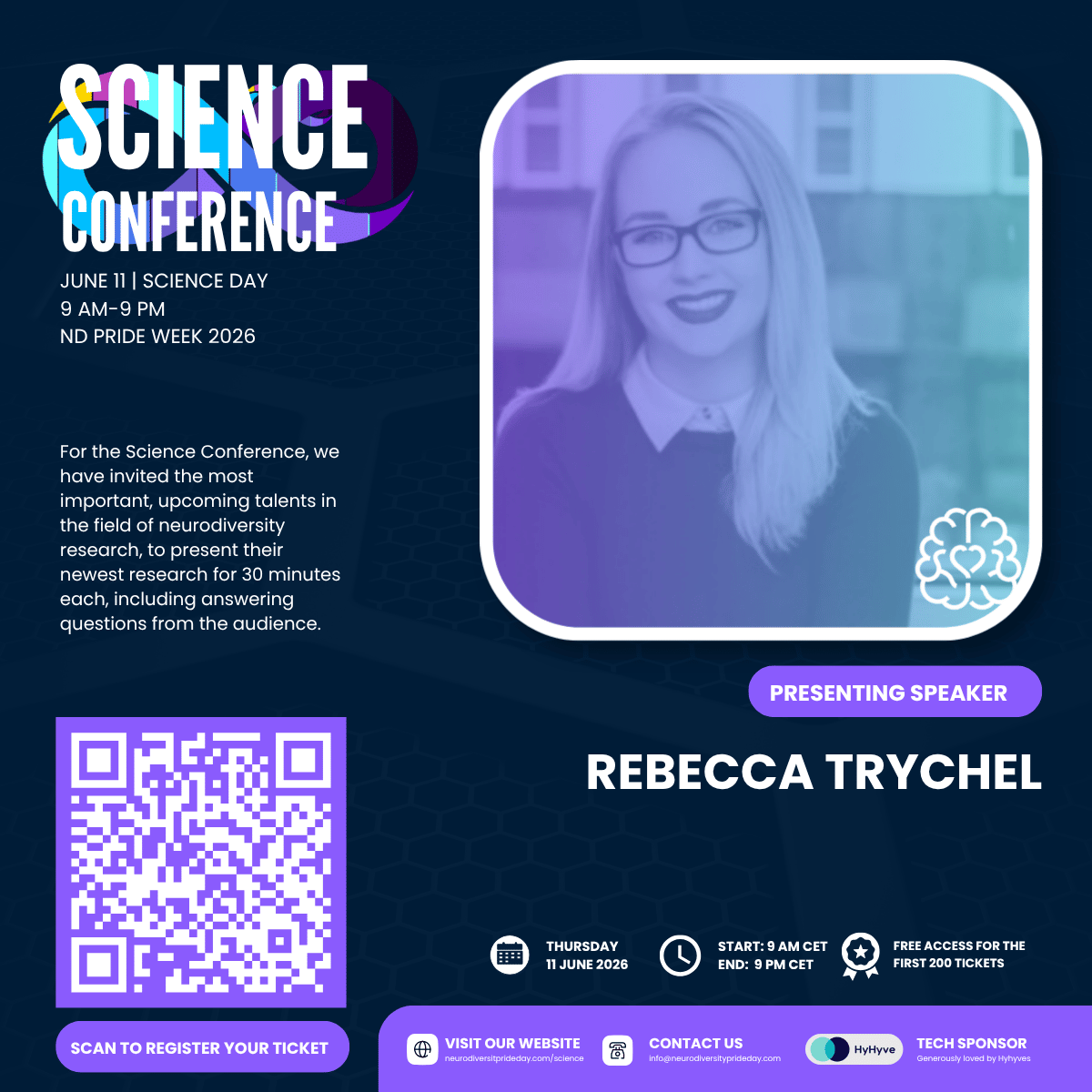
Rebecca Trychel
From Michigan, United States
Neurodiversity is experienced within educational systems that are not always easy to see. Rebecca Trychel’s research is interested in how those systems are understood and studied.
Rebecca Trychel does not often speak publicly about having ADHD. It is something she has usually kept to herself because once the label enters the conversation, it can start to shape how people see you. Questions about reliability or competence can surface before anyone has had the chance to really see the work itself.
Given this context, and the importance of open conversations in helping to destigmatize neurodiversity, this conference offers a meaningful moment to speak about it more openly.
Read more about this speaker
Even with years of advocacy and growing awareness, ADHD and neurodiversity are still widely misunderstood. Conversations often focus on perceived limitations while overlooking the ways neurodivergence can be a real strength. Many neurodivergent people bring extraordinary focus, persistence, and effort to their work, especially in systems that were not designed with neurodiverse thinkers in mind.
In Rebecca’s own experience, neurodivergence has influenced not only how she thinks, but also how she engages with problems, particularly through creative approaches, pattern recognition, and questioning norms around productivity and communication.
Before moving into the neurodiversity research space, Rebecca’s background was in education and family policy research. She holds a Master’s degree in Public Policy from the University of Michigan and has spent her career studying how education and family-serving systems function in practice. Much of her work uses data to illuminate gaps between policy goals and lived experience, and she is especially drawn to systems-level questions that can lead to more thoughtful and responsive policy.
As a Fellow with the Neurodiversity Foundation, Rebecca’s current research focuses on how supports are delivered to neurodiverse individuals in early educational settings. This work builds naturally on her previous research while opening new questions at the intersection of education, policy, and neurodiversity.
20:00 CEST · Amsterdam time
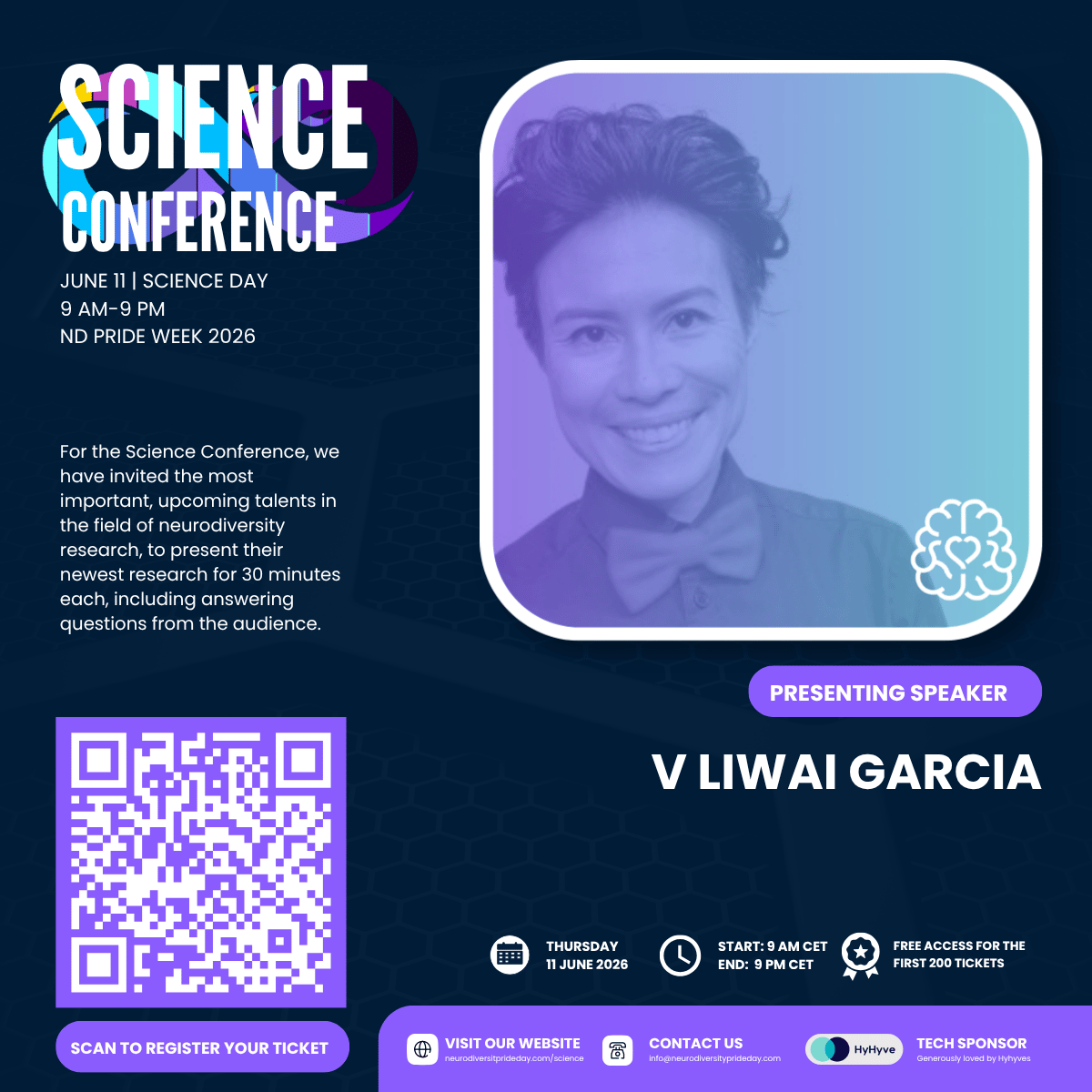
V Liwai Garcia
From Hawaiʻi, United States
V Liwai Garcia has watched the global call for more openly Autistic and AuDHD leaders grow louder in recent years. We are told disclosure fuels innovation, representation, and change, but what V has seen is far more complex.
Disclosure shifts power within companies. When disabled leaders disclose at work, it can lead to positive change, including empathetic leadership rooted in lived experience and teams operating at their full potential. It can also lead to bullying, job loss, reputational harm, and systemic silencing.
These outcomes ripple across teams, companies, and careers. They also reveal an overlooked aspect of the disability tax: the cost of leading while disabled.
Read more about this speaker
V’s research project, “The Price of Disclosure: Power, Retaliation, & Resilience for Autistic and AuDHD Leaders,” examines what happens when Autistic and AuDHD leaders disclose their disability in the workplace across countries, industries, leadership levels, and intersectional identities.
Specifically, the study looks at:
- Patterns in outcomes across contexts and identities
- Why and when leaders choose to disclose
- What factors protect, support, or undermine them
- How organizational power structures respond
By analysing the experiences of leaders worldwide, V’s research aims to generate tools that can help Autistic and AuDHD leaders assess risk, build resilience, and empower allies and organizations with strategies to change systems.
Disabled leaders should not have to disappear to earn a place in the world or workforce. V’s contribution to the conference asks how we can build safer, more equitable structures of power for all.
Science Conference Team